3 Future Intelligence Trends in Financial Services
The future of finance is automated. Discover 3 key trends in intelligence that are reshaping banking, trading, and risk management.
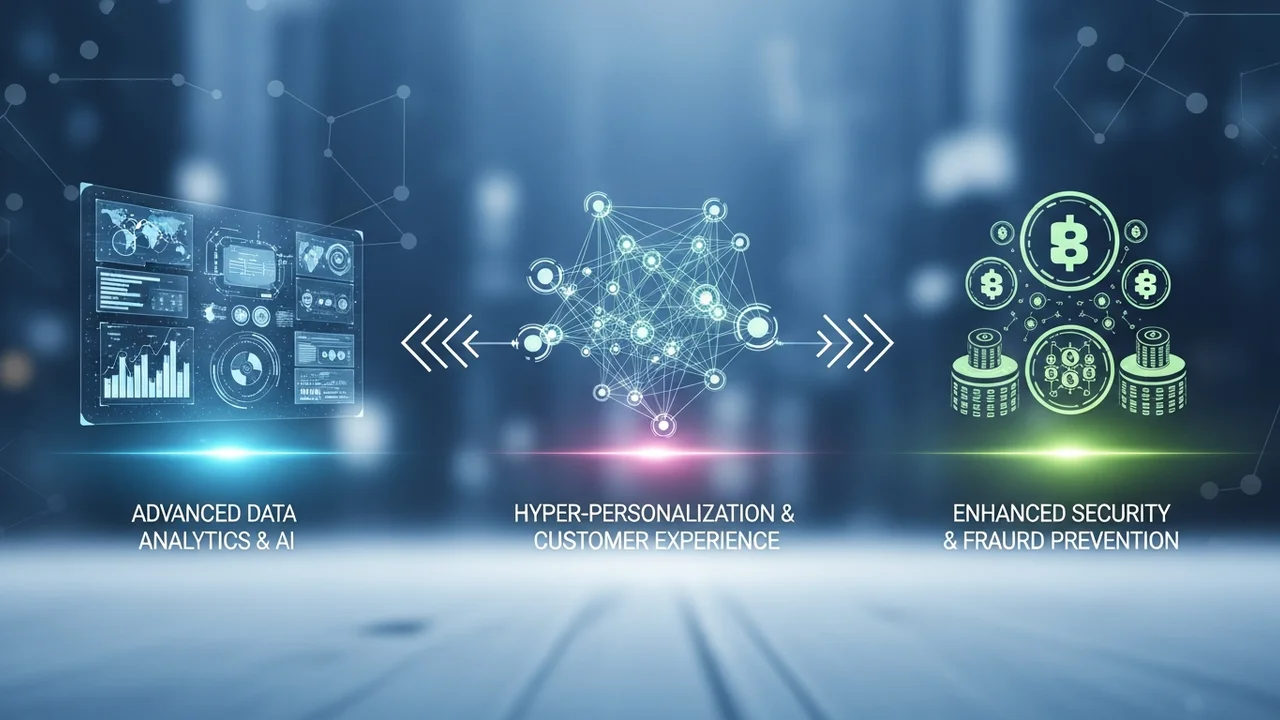
3 Future Intelligence Trends in Financial Services
The future of finance is automated. Discover 3 key trends in intelligence that are reshaping banking, trading, and risk management.
If you have been paying attention to the fintech landscape lately, you know that the buzz around AI isn't just hype anymore. It is fundamentally changing how money moves, how risks are calculated, and how banks interact with their customers. We are moving past the era of simple chatbots and entering a phase where autonomous intelligence is the backbone of financial operations. Let's dive into the three biggest trends that are currently turning the financial world upside down.
Hyper Personalized AI Driven Wealth Management and Advisory
Gone are the days when personalized financial advice was reserved for the ultra-wealthy. Today, AI agents are democratizing wealth management. These systems analyze your spending habits, risk tolerance, and long-term goals in real-time to provide actionable advice that actually makes sense for your specific situation. It is like having a private banker in your pocket 24/7.
One of the standout products in this space is Cleo. It acts as an AI-powered financial assistant that uses a conversational interface to help users budget and save. It is incredibly popular among Gen Z and Millennials because it doesn't talk down to you; it keeps things casual while being brutally honest about your spending. Another heavy hitter is Betterment, which uses sophisticated algorithms to automate portfolio management. While Cleo is more about day-to-day cash flow, Betterment is your go-to for long-term investment strategies.
When comparing these, Cleo is your daily companion for behavioral change, whereas Betterment is a set-it-and-forget-it investment engine. Pricing for Cleo is free for basic features with a small subscription for premium insights, while Betterment charges a low annual fee based on your account balance, usually around 0.25%.
Autonomous Risk Assessment and Fraud Detection Systems
Fraud is getting smarter, which means our defenses have to be even faster. Traditional rule-based systems are failing because they can't keep up with the sheer volume of digital transactions. This is where autonomous intelligence steps in. These systems learn from patterns, not just static rules, allowing them to spot anomalies that a human analyst would miss in a million years.
Take Feedzai, for example. It is a powerhouse in the fraud prevention space. It uses machine learning to analyze transactions in milliseconds, stopping fraud before it even happens. Then there is Sift, which focuses heavily on digital trust and abuse prevention. Sift is fantastic for e-commerce platforms that need to distinguish between a legitimate customer and a bot trying to commit account takeover fraud.
If you are running a high-volume e-commerce site, Sift is likely your best bet due to its focus on user behavior. If you are a financial institution dealing with complex banking transactions, Feedzai’s deep integration capabilities make it the industry standard. Pricing for these is usually enterprise-grade, meaning you will need to request a custom quote, but expect to pay based on transaction volume or the number of users protected.
Algorithmic Trading and Predictive Market Intelligence
The stock market has always been a game of information, but now it is a game of processing speed and predictive accuracy. AI-driven trading platforms are now capable of analyzing news sentiment, social media trends, and historical data to predict market movements before they happen. This isn't just for hedge funds anymore; retail traders are getting access to these tools too.
Trade Ideas is a classic example of a tool that brings institutional-grade AI to the retail trader. It scans the market in real-time and suggests trade setups based on probability. On the other hand, Kavout uses a 'Kai' AI engine to rank stocks based on their potential performance, providing a 'K-Score' that helps investors make data-backed decisions.
Trade Ideas is perfect for day traders who need real-time alerts and visual setups. Kavout is better for swing traders or long-term investors who want a quantitative edge without staring at charts all day. Trade Ideas starts around $118 per month, while Kavout offers tiered pricing starting from a free version up to professional subscriptions around $49 per month. These tools are changing the game by leveling the playing field, making it possible for anyone with a laptop to compete with the big players on Wall Street.
:max_bytes(150000):strip_icc()/277019-baked-pork-chops-with-cream-of-mushroom-soup-DDMFS-beauty-4x3-BG-7505-5762b731cf30447d9cbbbbbf387beafa.jpg)