3 Future Intelligence Trends in Cybersecurity
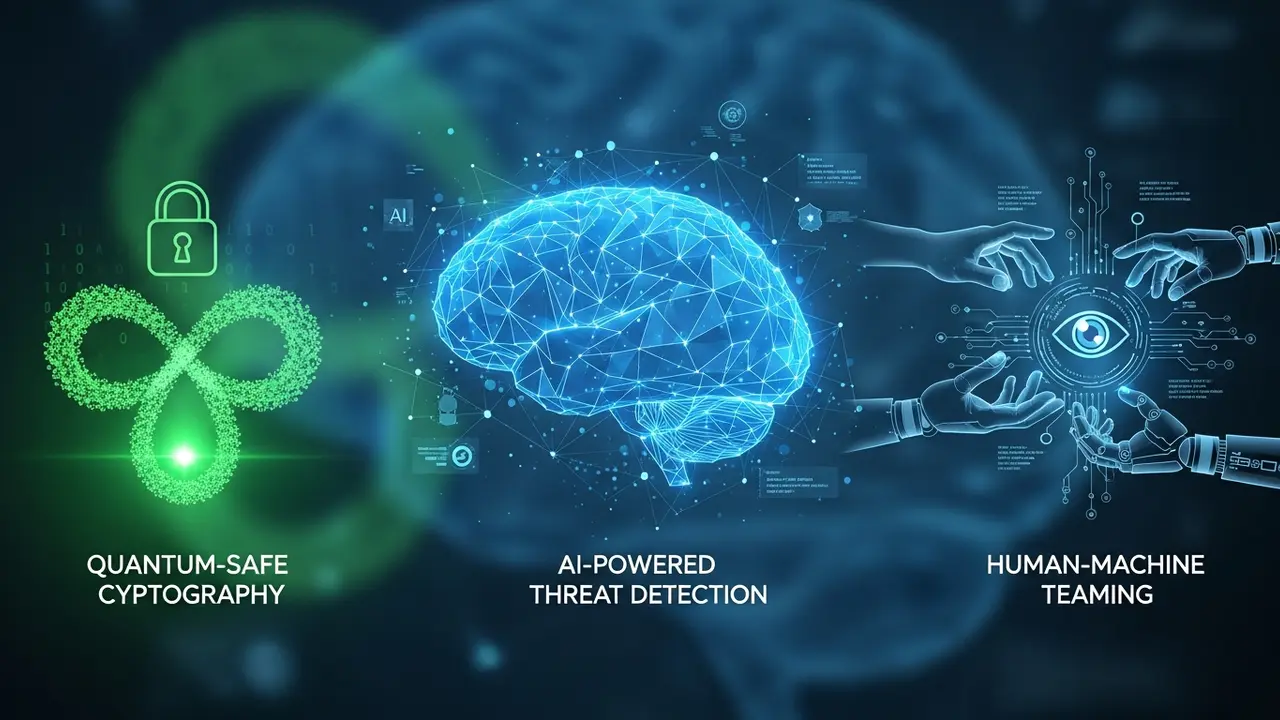
Defending against the future. Explore 3 intelligence trends that are revolutionizing how we detect and prevent cyber threats.
Defending against the future. Explore 3 intelligence trends that are revolutionizing how we detect and prevent cyber threats.
3 Future Intelligence Trends in Cybersecurity
The digital landscape is shifting under our feet. If you have been paying attention to the news, you know that cyber threats are no longer just about some kid in a basement trying to guess your password. We are talking about sophisticated, AI-driven attacks that can bypass traditional firewalls before you even finish your morning coffee. As we look toward the next few years, the intersection of artificial intelligence and cybersecurity is becoming the most critical battleground for businesses and individuals alike. Let’s dive into the three major trends that are changing the game and how you can actually use them to stay safe.
Predictive Threat Hunting with AI Driven Analytics
Gone are the days of reactive security. You cannot just wait for an alert to pop up on your dashboard anymore. The new standard is predictive threat hunting. This trend uses machine learning models to analyze massive datasets—think billions of network logs—to spot anomalies that a human analyst would never see. It is like having a security guard who can read the future. By identifying patterns that precede an attack, these systems can isolate compromised segments of a network before the malware even executes.
When we talk about products in this space, Darktrace is a name that keeps coming up. Their 'Self-Learning AI' approach is essentially the gold standard for autonomous response. It learns the 'pattern of life' for every user and device on your network. If someone suddenly starts downloading sensitive files at 3 AM from a location they have never been to, Darktrace doesn't just flag it; it can automatically throttle that connection. Another strong contender is CrowdStrike Falcon. Their threat intelligence cloud is incredibly fast at correlating data across millions of endpoints. If a new threat hits a company in Singapore, the Falcon platform updates its global defense posture in seconds, protecting your business in the US or Southeast Asia simultaneously.
In terms of pricing, these aren't cheap, but they are investments. Darktrace usually operates on a custom quote basis, often starting in the tens of thousands of dollars annually depending on your network size. CrowdStrike offers tiered pricing, with their 'Pro' version starting around $8.99 per endpoint per month. It is a significant jump from basic antivirus, but when you compare it to the cost of a ransomware payout, it is a no-brainer.
Automated Incident Response and Remediation
Let’s be real: the biggest bottleneck in cybersecurity is human speed. Even the best security team needs time to investigate, verify, and remediate. AI-driven incident response changes this by automating the 'boring' parts of the job. When a threat is detected, the system can automatically quarantine the device, reset user credentials, and patch the vulnerability without a human ever touching a keyboard.
Palo Alto Networks Cortex XSOAR is the leader here. It is an orchestration platform that connects all your security tools. Imagine you have a phishing email alert. XSOAR can automatically extract the malicious URL, check it against threat intelligence databases, block the domain on your firewall, and delete the email from all employee inboxes—all in under 60 seconds. It is like having a super-powered intern that never sleeps. For smaller teams, Tines is a fantastic, no-code automation platform. It is much more user-friendly and allows you to build complex workflows without needing a degree in computer science. Tines is priced per user, making it more accessible for mid-sized businesses.
AI Powered Identity and Access Management
Passwords are dead, even if we haven't fully buried them yet. The third major trend is the move toward AI-powered Identity and Access Management (IAM). Instead of just checking a password, these systems look at behavioral biometrics. How do you type? How do you move your mouse? What is your typical login time? If the AI detects that the 'you' logging in doesn't match the 'you' that usually logs in, it triggers an extra layer of verification.
Okta has been integrating AI into their identity cloud to provide 'Adaptive MFA.' It analyzes context—like IP reputation and device health—to decide if you are who you say you are. If you are logging in from a new device in a different country, it will force a hardware key check. Ping Identity is another heavy hitter, offering deep integration for enterprise-level security. They focus heavily on 'Zero Trust' architectures, ensuring that even if someone gets inside your network, they can't move laterally. Pricing for these services is typically per-user, per-month, usually ranging from $3 to $15 depending on the feature set. It is a small price to pay to ensure that your digital front door is actually locked.
The reality is that the tools are getting better, but the attackers are too. The key is to stop looking at cybersecurity as a one-time purchase and start looking at it as a continuous, automated process. Whether you are a small startup in Jakarta or a massive corporation in New York, the shift toward AI-driven defense is the only way to keep your data out of the wrong hands. Don't wait for the breach to happen before you decide to upgrade your stack.
:max_bytes(150000):strip_icc()/277019-baked-pork-chops-with-cream-of-mushroom-soup-DDMFS-beauty-4x3-BG-7505-5762b731cf30447d9cbbbbbf387beafa.jpg)