LangChain vs CrewAI Best Tools for Multi-Agent Systems
Compare LangChain and CrewAI to determine the best framework for building complex multi-agent systems. Analyze their strengths in orchestration and task management.
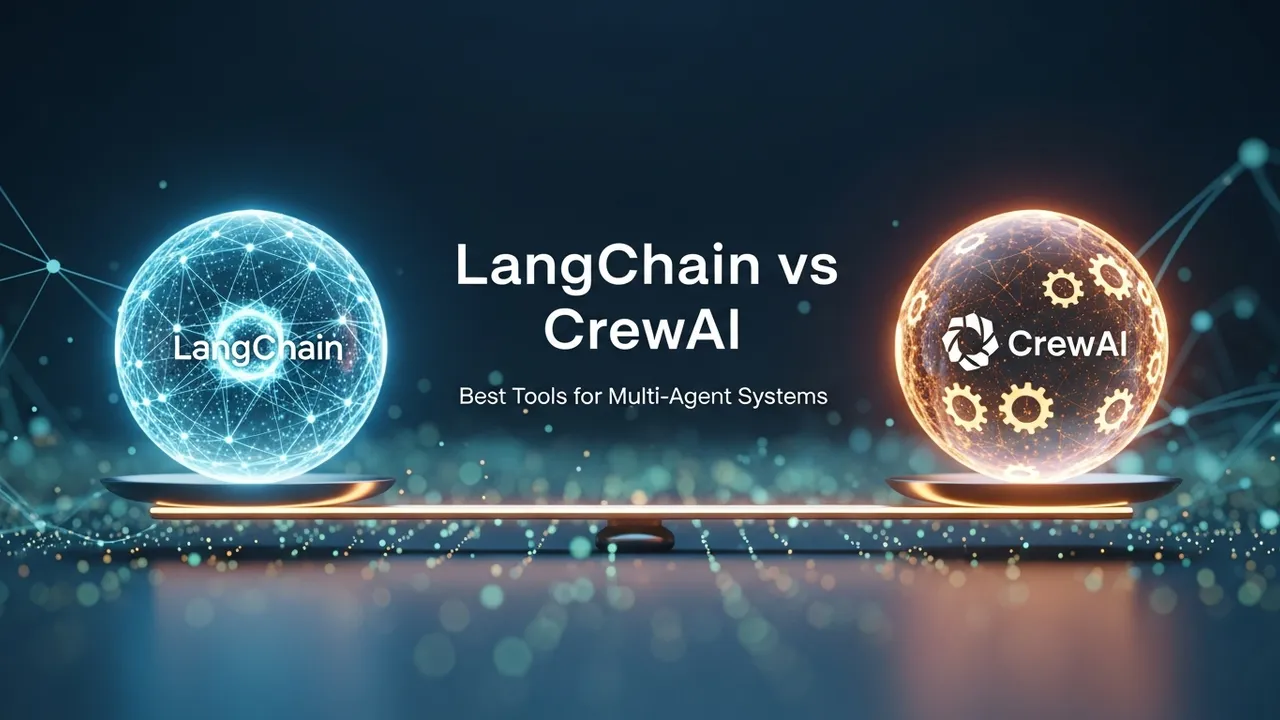
LangChain vs CrewAI Best Tools for Multi-Agent Systems
Compare LangChain and CrewAI to determine the best framework for building complex multi-agent systems. Analyze their strengths in orchestration and task management.
Understanding the Shift to Multi-Agent Systems
If you have been keeping an eye on the AI space lately, you have probably noticed that we are moving way beyond simple chatbots. It is no longer just about asking a model a question and getting a text response. We are entering the era of autonomous agents—systems that can plan, execute, and collaborate to get actual work done. When you start building these, you quickly realize that one single AI model isn't enough. You need a team. That is where the debate between LangChain and CrewAI comes in. Both are massive players in the ecosystem, but they approach the problem of orchestration from very different angles.
LangChain The Swiss Army Knife of AI Orchestration
LangChain has been the industry standard for a while now. Think of it as the foundational layer for almost any LLM-based application. It provides the building blocks—chains, memory, document loaders, and vector store integrations—that allow you to connect an LLM to your data. When it comes to multi-agent systems, LangChain offers a specific module called LangGraph. This is where things get interesting. LangGraph allows you to define cyclic graphs, which is essentially how you create agents that can loop back, check their work, and refine their output. It is incredibly powerful if you are a developer who wants total control over every single step of the process.
CrewAI The Specialist for Collaborative Agent Teams
On the other side of the ring, we have CrewAI. While LangChain is a general-purpose framework, CrewAI is built specifically for the concept of 'role-playing' agents. It treats your AI agents like a human team. You define a 'Manager' agent, a 'Researcher' agent, and a 'Writer' agent, and you give them a shared goal. CrewAI handles the heavy lifting of communication between these agents. It is much more opinionated than LangChain, which is actually a good thing if you want to get a multi-agent system up and running in an afternoon rather than spending weeks wiring up complex state machines.
Comparing Key Features and Use Cases
When you look at the two side-by-side, the choice usually comes down to your specific project needs. If you are building a complex, custom enterprise application where you need to integrate with legacy databases, specific cloud APIs, and highly custom logic, LangChain is your best bet. It is the 'developer's choice.' However, if you are building a workflow where you need three agents to talk to each other to write a blog post or analyze a market report, CrewAI is significantly faster to implement. CrewAI abstracts away the complexity of agent handoffs, making it perfect for rapid prototyping and task-oriented automation.
Recommended Tools and Pricing Models
Both frameworks are open-source, which is great news for your budget. You can start building with both for free. However, as you scale, you will likely need to look at their enterprise offerings. LangChain offers LangSmith, which is a platform for debugging, testing, and monitoring your agent chains. It is a paid service, usually starting around $20 per user/month for small teams, with enterprise tiers available. CrewAI has recently introduced CrewAI+ which provides a managed environment for deploying your agent teams. Pricing for these managed services is often usage-based, depending on the number of agent runs and the complexity of the tasks. For most startups, the open-source versions are more than enough to get started, but keep an eye on your API costs from providers like OpenAI or Anthropic, as those will be your biggest recurring expense regardless of which framework you choose.
Which One Should You Choose for Your Next Project
If you are just starting out and want to see how agents can work together, go with CrewAI. The syntax is intuitive, and the 'team' metaphor makes it very easy to understand how to delegate tasks. If you are a seasoned engineer building a production-grade system that needs to be highly resilient and integrated into a massive existing codebase, stick with LangChain and LangGraph. You will appreciate the granular control. At the end of the day, the best tool is the one that gets your agents working together without driving you crazy with debugging. Both of these frameworks are evolving rapidly, so don't be surprised if they start borrowing features from each other in the coming months.
:max_bytes(150000):strip_icc()/277019-baked-pork-chops-with-cream-of-mushroom-soup-DDMFS-beauty-4x3-BG-7505-5762b731cf30447d9cbbbbbf387beafa.jpg)