3 Future Intelligence Trends in Agriculture
Smart farming is the future. Learn about 3 intelligence trends that are optimizing energy grids and promoting sustainable development.
3 Future Intelligence Trends in Agriculture
Smart farming is the future. Learn about 3 intelligence trends that are optimizing energy grids and promoting sustainable development.
Precision Farming and AI Driven Crop Management
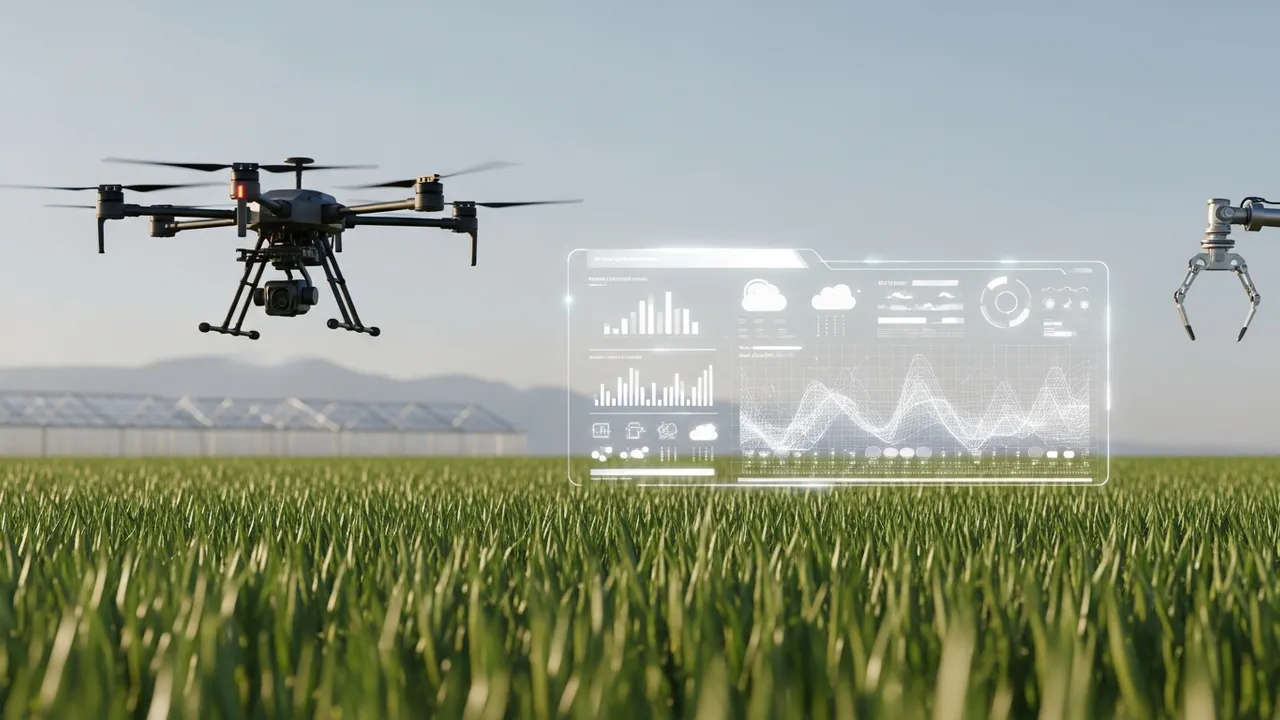
When we talk about the future of agriculture, we are really talking about data. Precision farming has moved from a buzzword to a necessity. By using AI-powered sensors and satellite imagery, farmers can now monitor soil health, moisture levels, and nutrient density in real-time. This isn't just about growing more food; it's about growing it smarter. For instance, platforms like John Deere’s Operations Center use machine learning to analyze field data, allowing tractors to apply fertilizer only where it is needed. This reduces waste and environmental impact significantly. The shift here is from broad-spectrum farming to hyper-localized care for every single plant.
Autonomous Robotics and AI Hardware Solutions
Labor shortages are hitting the agricultural sector hard globally. This is where autonomous robotics steps in. We are seeing a surge in AI-driven robots that can handle weeding, harvesting, and even fruit picking. Take the Carbon Robotics LaserWeeder, for example. It uses computer vision to identify weeds and zaps them with thermal energy, eliminating the need for chemical herbicides. It costs around $150,000 to $200,000, but the ROI comes from massive savings on labor and chemical costs. Another player is Naïo Technologies, whose robots like the Orio are perfect for vegetable farms. These machines are changing the game by working 24/7 without fatigue, which is a massive leap forward for large-scale operations.
Predictive Analytics for Climate Resilience
Climate change is the biggest variable in farming. AI is now being used to predict weather patterns with incredible accuracy, helping farmers decide when to plant and when to harvest. Tools like Climate FieldView provide predictive modeling that helps mitigate risks associated with extreme weather. By integrating historical data with real-time climate feeds, these systems offer actionable insights that were previously impossible to calculate. The pricing for these platforms usually follows a subscription model, often ranging from $500 to $2,000 per year depending on the acreage. Compared to the potential loss of an entire crop cycle, this is a small price to pay for insurance against the elements.
Comparing Top AI Agriculture Platforms
If you are looking to get started, you have to weigh your options. Climate FieldView is excellent for broad-acre crop management and data visualization. It is user-friendly and integrates well with existing machinery. On the other hand, Taranis offers high-resolution imagery that detects leaf-level issues, making it better for specialty crops. If you are focused on robotics, Carbon Robotics is the leader in mechanical weeding, while FarmWise offers a similar service but often through a service-based model rather than direct hardware ownership. Choosing the right tool depends on your farm size and your specific pain points—whether that is labor, chemical usage, or yield optimization.
The Future of Sustainable Farming Practices
The integration of AI into agriculture is not just about efficiency; it is about sustainability. By optimizing water usage through AI-controlled irrigation systems like those from Netafim, farmers can reduce water consumption by up to 30%. This is critical for regions facing drought. As these technologies become more affordable, we will see a democratization of smart farming. Small-scale farmers in Southeast Asia and the US are already starting to use mobile-based AI apps to diagnose plant diseases via camera photos. This accessibility is the real trend to watch. It is not just the big industrial farms that will benefit; it is the entire global food supply chain that is getting a much-needed intelligence upgrade.
:max_bytes(150000):strip_icc()/277019-baked-pork-chops-with-cream-of-mushroom-soup-DDMFS-beauty-4x3-BG-7505-5762b731cf30447d9cbbbbbf387beafa.jpg)