3 Future Intelligence Challenges for Global Markets
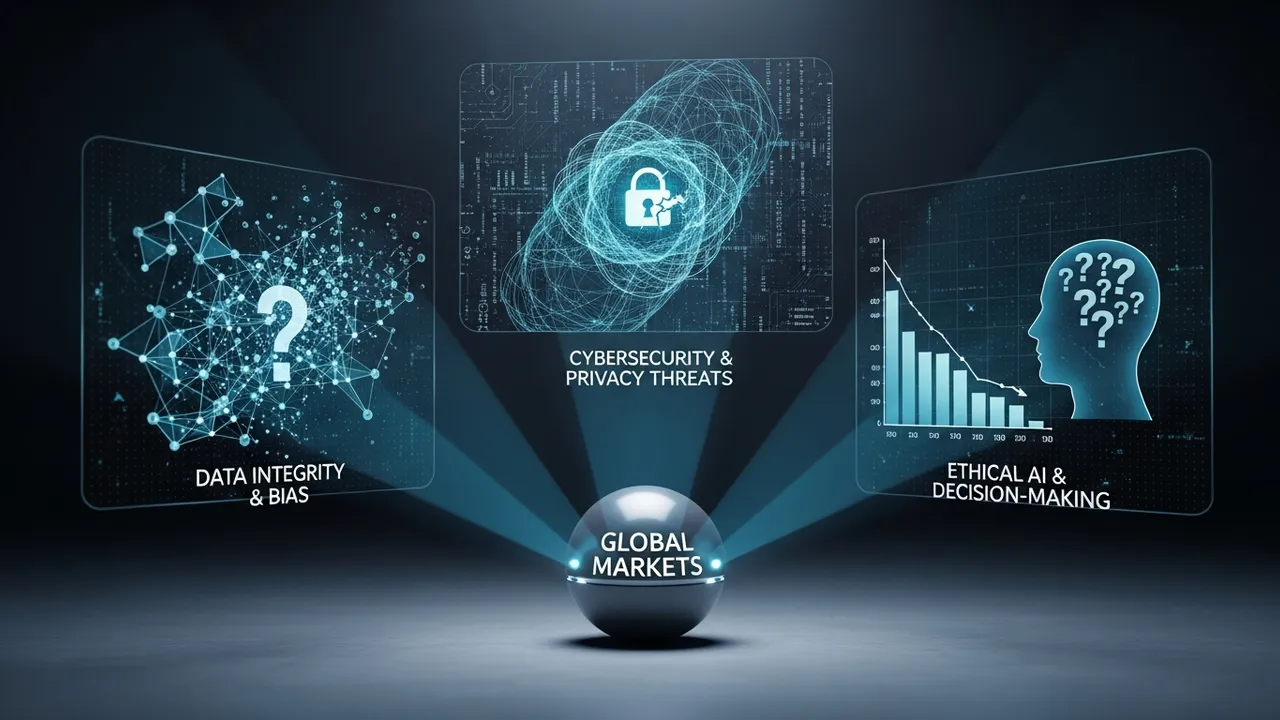
Understand the risks. We discuss 3 major challenges that future intelligence systems pose to global economic stability and market competition.
3 Future Intelligence Challenges for Global Markets
Understand the risks. We discuss 3 major challenges that future intelligence systems pose to global economic stability and market competition.
The Rise of Algorithmic Market Volatility and Systemic Risk
When we talk about the future of global markets, we are essentially talking about a massive, interconnected web of high-frequency trading algorithms and autonomous decision-making agents. The first major challenge we face is the potential for unprecedented market volatility. Imagine a scenario where thousands of AI agents, all programmed to optimize for profit, react to a single piece of news simultaneously. This creates a feedback loop that can crash markets in seconds. Unlike human traders, who might pause to consider the broader context, these agents operate at microsecond speeds, often ignoring the fundamental health of the economy. We have already seen 'flash crashes' in the past, but as these systems become more sophisticated, the risk of a systemic collapse increases. The challenge here is not just technical; it is about how we regulate these autonomous entities to ensure they don't inadvertently trigger a global financial meltdown.
Market Concentration and the Monopoly of Intelligence
The second challenge is the growing divide between those who own the intelligence and those who don't. We are seeing a trend where a handful of tech giants control the most advanced AI models. This creates a 'monopoly of intelligence' that can stifle competition. If a small startup in Southeast Asia or the US wants to compete with a giant that has access to superior predictive analytics and automated supply chain management, they are already at a massive disadvantage. This concentration of power means that the future of global markets could be dictated by a few boardrooms in Silicon Valley. To combat this, we need to look at tools that democratize access to AI. Platforms like Hugging Face or open-source frameworks like LangChain are trying to bridge this gap, but the cost of compute remains a barrier. For instance, while a basic subscription to OpenAI's API might cost $20 a month, scaling an enterprise-grade agentic system can run into thousands of dollars, effectively pricing out smaller players.
The Ethical and Regulatory Maze of Autonomous Decision Making
Finally, we have the challenge of accountability. When an AI agent makes a decision that leads to a massive financial loss or a breach of market regulations, who is responsible? Is it the developer, the company that deployed it, or the AI itself? This is a legal gray area that global markets are currently struggling to navigate. In the US, the SEC is already looking into how AI-driven trading platforms should be audited. In Southeast Asia, countries like Singapore are taking a more proactive approach with the AI Verify framework, which helps companies test their AI systems for fairness and transparency. The cost of compliance is rising, and businesses need to invest in tools like Fiddler AI or Arize AI to monitor their models. These tools, which can cost anywhere from $5,000 to $50,000 annually depending on the scale, are becoming essential for any firm that wants to stay on the right side of the law while leveraging future intelligence.
Comparing Tools for Market Intelligence and Risk Management
To navigate these challenges, businesses are turning to specialized AI platforms. Let's look at a few key players. First, there is Bloomberg Terminal's AI integration, which is the gold standard for institutional investors, costing upwards of $25,000 per year. It provides unparalleled data, but it is out of reach for most. On the other end of the spectrum, we have tools like AlphaSense, which uses AI to search through millions of documents to find market insights. It is much more accessible, with pricing models that start around $5,000 per user. Then there is Kensho, which offers advanced analytics for financial professionals. The choice depends on your specific use case. If you are a hedge fund, you need the speed of Bloomberg. If you are a market researcher, AlphaSense is likely your best bet. The key is to understand that these tools are not just 'nice to have'—they are the new infrastructure of the global economy. As we move forward, the ability to manage these AI-driven risks will be the defining factor between market leaders and those who get left behind in the wake of the intelligence revolution.
:max_bytes(150000):strip_icc()/277019-baked-pork-chops-with-cream-of-mushroom-soup-DDMFS-beauty-4x3-BG-7505-5762b731cf30447d9cbbbbbf387beafa.jpg)